
Selecting the ideal content platform today often leads straight to tool fatigue. While most platforms promise end-to-end automation, their real-world outputs vary wildly, ranging from polished, publish-ready drafts to completely fabricated facts that demand total rewrites. Finding the right software is rarely about hunting down a one-size-fits-all solution. Instead, it comes down to matching specific underlying engine architectures to your actual editorial workflow.
This guide evaluates 15 leading content platforms based on hands-on testing inside active publishing pipelines. Rather than treating every application as a generic text generator, we break down each tool by its primary strengths, including long-form articles, conversion copy, social media adaptation, technical SEO, live research, and editorial refinement. A quick word of caution before you allocate your budget: this software category evolves faster than almost any other. Several tools featured here have fundamentally shifted their value propositions over the past year alone, so always verify current pricing and figures on the vendor’s site before signing up.
What Makes an AI Content Tool Worth Using?
Evaluating content software requires looking past aggressive marketing claims and examining structural performance. Your single most critical metric is output velocity relative to required editing time. A platform that drafts 2,000 words in seconds offers zero real value if your editorial team spends three hours correcting awkward phrasing, unverified statistics, or flat brand messaging.
Source verification is the next baseline requirement. Software built strictly on static training data frequently invents facts, misquotes sources, or references obsolete standards. Modern production demands real-time web search integration, strict prompt parameter adherence, and granular style controls that align with distinct enterprise style guides.
Search engine optimization has also evolved far beyond simple keyword placement. With the rise of Generative Engine Optimization (GEO), your content must now earn citations inside AI discovery engines like ChatGPT, Perplexity, Gemini, and Google AI Overviews, rather than competing solely for traditional search links.
Finally, economic feasibility must match daily operational utility. Enterprise pricing makes sense if your team relies on complex API connections, proprietary brand models, and multi-user governance. Independent creators and boutique agencies, however, need transparent per-seat pricing and predictable usage caps. The right platform slots into your existing CMS, research setups, and social schedulers without introducing technical friction.
15 AI Content Generation Tools for Blogs, Marketing, and Social Media
1. ChatGPT
OpenAI developed ChatGPT as a versatile conversational system, and it remains one of the most flexible foundations for modern content creation. The legacy GPT-4o model that powered the platform for years was officially retired from ChatGPT on February 13, 2026. The product now runs on the GPT-5 family, featuring GPT-5.5 Instant as the default model across every tier, alongside the frontier GPT-5.6 line (Sol, Terra, and Luna, launched July 9, 2026) reserved for complex reasoning. OpenAI collapsed its previous maze of model names into three straightforward choices: Instant, Thinking, and Pro, with an intelligent auto-router directing each prompt to the right engine.
Inside an active publishing pipeline, ChatGPT functions best as an interactive creative partner. It excels at building structured content frameworks, translating technical research into accessible language, and repurposing long-form articles into newsletters or ad copy. Its Custom GPTs and persistent custom instructions keep brand personas and editorial rules intact across separate sessions, while its code interpreter converts uploaded spreadsheets into clear narrative points. The newer models can also draw context from past conversations, uploaded files, and your connected Gmail to personalize output.
Human oversight remains essential for factual research and nuanced analysis. Without strict prompts requiring verified sources, the underlying models still generate authoritative-sounding text backed by inaccurate details. Editorial teams must take ownership of final fact-checking, brand voice alignment, and structural polishing to strip out repetitive default phrasing. ChatGPT Plus costs $20 per month, with higher Pro and Business tiers available for organizations requiring frontier models at scale.
2. Claude
Developed by Anthropic, Claude stands out for its natural prose rhythm and massive working memory. The old Claude 3.5 Sonnet framework is now distant history. As of mid-2026, Anthropic’s flagship lineup centers on Claude Opus 4.8 (released May 28, 2026), Claude Sonnet 5, the Mythos-class flagship Claude Fable 5 (June 9, 2026), and Claude Opus 5 (July 24, 2026). Its context window has expanded to a full 1 million tokens on top-tier models, roughly 750,000 words, allowing you to process complete whitepapers, interview transcripts, or codebases in a single pass without breaking files apart.
Claude handles long-form drafting, heavy editorial passes, and complex document summaries with greater nuance than most competitors. Writers can upload entire archives to train the engine to mirror specific sentence structures and tones. Additionally, its Artifacts panel provides a dedicated side-by-side workspace to refine drafts, code, or markdown alongside the main conversation window.
The most notable upgrade over older versions is that Claude now includes native live web search inside its consumer interface. It no longer relies on manually pasted context or external API wrappers to pull current information, closing a major gap that previously pushed researchers elsewhere. Claude Pro is priced at $20 per month, directly matching ChatGPT Plus.
3. Jasper
Jasper focuses on end-to-end marketing production for fast-moving creative teams. Powered by an aggregated engine layer that routes requests across models from OpenAI, Anthropic, and Google, it maintains consistent messaging across large organizations. Its central Brand Voice repository scans existing company collateral, style guides, and product catalogs to enforce guidelines on every piece of output.
The platform’s primary strength lies in multi-channel campaign execution. A single brief can simultaneously generate a long-form blog post, corresponding LinkedIn updates, targeted email sequences, and paid search copy. Built-in Canvas workflows step non-technical users through structured prompt flows, while project management views allow directors to track approvals and assign content tasks.
Jasper has fully shifted to seat-based pricing. The Pro plan costs $69 per month (or $59 per month billed annually), as the older $39 Creator tier is phased out for new users. The multi-seat Business plan requires custom quotes, generally ranging from several hundred to several thousand dollars monthly for larger marketing departments. There is no permanent free tier, only a 7-day trial. This price structure makes Jasper ideal for enterprise teams publishing on-brand marketing collateral daily, rather than solo freelance writers.
4. Copy.ai
Copy.ai has evolved far beyond its original role as a short-form copy generator. In 2026, it operates primarily as a go-to-market automation platform for sales and marketing operations. Its Workflows framework builds automated pipelines that scrape incoming web links, extract customer pain points, and instantly output tailored sales emails or structured content outlines.
The software still performs exceptionally well on short-form conversion content, including ad variations, e-commerce listings, meta descriptions, and outreach templates. By inputting target demographics and feature lists, teams can generate dozens of headline iterations for quick split-testing. Its multi-model architecture blends engines from OpenAI, Anthropic, and Gemini behind the scenes.
The pricing structure reflects this operational pivot. A free tier offers 2,000 words per month, while the Chat plan starts at $29 per month for five seats with unlimited chat words. The advanced workflow automation lives in the Growth tier and above, which begin around $1,000 per month with no mid-tier option in between. Solo writers looking purely for long-form draft generation may find the platform overly complex. It is best utilized for structured first drafts and programmatic content tasks rather than standalone thought leadership.
5. Writesonic
Writesonic has undergone the most dramatic repositioning on this list, transforming into a specialized AI Search Visibility platform rather than a standard article generator. The main dashboard centers on GEO tracking, monitoring how your brand appears across ChatGPT, Gemini, Perplexity, and Google AI Overviews, then delivering targeted content and citation fixes through an impact-prioritized Action Center.
Its core drafting tools remain fully functional. The AI Article Writer builds structured drafts, while Chatsonic manages real-time research. Writers can enter a focus keyword, select competitor URLs, and receive an outline designed to address missing subtopics and common search queries, complete with direct export integrations for WordPress.
Because the software now bases its pricing on search visibility monitoring, self-serve tiers cater to team budgets rather than individual creators. Paid plans start at $79 per month billed annually (roughly $99 month-to-month) for the Starter plan, rising to $199 for Basic and $399 for Growth. A limited free tier remains available for basic writing tasks and initial search audits, though editors must still add genuine industry analysis before publishing.
6. Rytr
Rytr offers a lightweight, cost-effective interface designed for rapid short-form text generation. Operating through a clean editor, users can choose from over 40 distinct use cases, 20+ tones of voice, and 30+ languages without navigating complicated configuration menus.
It suits high-volume, daily production tasks such as quick email responses, social media variations, calls to action, meta tags, and product descriptions. Built-in tools allow writers to rephrase sentences, expand short points, and run instant grammar checks directly in the text field.
Rytr remains a top budget choice. A free plan provides 10,000 characters per month, while paid options start at approximately $9 per month (around $7.50 when billed annually). A Premium tier sits near $24 per month for unlimited usage, custom use cases, and multi-language support. Because its core architecture struggles to maintain long-form narrative structure, treat Rytr as a micro-copy engine rather than a long-form article writer.
7. Surfer
Surfer functions as a search optimization and content intelligence workspace rather than a simple text generator. Its underlying engine evaluates top-ranking search pages across 500+ organic signals, analyzing target word counts, heading structures, keyword densities, image counts, and semantic entity relationships to generate a real-time Content Score.
Through its integrated Surfer AI module, the software can generate complete articles directly inside the optimization editor. These drafts automatically align headings and semantic terms with top competitive benchmarks, showing precisely which keywords to include and how frequently to use them.
Surfer updated its plan structure in 2026. The active pricing ladder includes Discovery ($49/mo), Standard ($99/mo), Pro ($182/mo), Peace of Mind ($299/mo), and Enterprise ($999/mo). AI article generation credits are sold as a separate pool from standard Content Editor credits. The legacy Essential and Scale plan names have been retired, which explains why older online reviews list conflicting prices. Because the platform optimizes heavily for statistical search alignment, human editors should review every piece to maintain a natural voice.
8. Anyword
Anyword centers on performance-driven copy, leveraging predictive analytics to evaluate marketing text before campaigns launch. Its engine compares generated copy against a massive database of historical ad performance, assigning a Predictive Performance Score that forecasts click-through and conversion probabilities across targeted audience demographics.
The software offers high value for performance marketers managing paid social campaigns, Google Ads, email subject lines, and landing page headers. Marketers can build detailed buyer personas, upload historical conversion metrics, and generate copy explicitly tailored to specific stages of the sales funnel.
Every tier includes unlimited text generation, meaning pricing limits are based on data access and predictive features rather than word counts. The Starter plan costs $49 per month (or $39 billed annually), while the Data-Driven plan sits at $99 per month ($79 annually) to add three user seats and real-time performance scoring. Business and Enterprise options are custom-quoted for organizations training the system on proprietary campaign data. Teams producing long-form narrative content will need to pair Anyword with a dedicated editorial tool.
9. Grammarly
Grammarly serves as an intelligent editorial assistant designed to polish and refine raw drafts. Its context-aware engine checks mechanics, tonal consistency, vocabulary choice, and structural clarity in real time. Note on branding: the legacy Premium tier is now named Pro, and parent company Grammarly rebranded as Superhuman in October 2025, though the writing application retains the Grammarly brand name.
The platform includes generative AI capabilities that can expand or condense text, adjust tone from informal to executive, and rewrite dense technical passages for broader audiences. Its plagiarism scanner checks drafts against billions of web pages before publication, and Pro users receive 2,000 AI prompts per member each month.
Grammarly is not designed to replace initial draft generators. Its strength lies in structural refinement and quality control rather than original composition. Pro pricing starts at $12 per member per month billed annually ($144 per year), or $30 month-to-month, backed by a useful free tier that includes 100 monthly AI prompts. It works best as a final editorial gatekeeper for drafts generated across other platforms.
10. Canva
Canva integrates generative language directly into its graphic design suite via Magic Write. Operating directly inside presentation decks, social media templates, and document layouts, creators can write and design visual collateral within a single interface.
This setup streamlines the production of visual presentation slides, short-form social graphics, infographic copy, and multi-format marketing assets. Note that Canva’s AI capabilities now consume a monthly Magic Studio credit pool, with Pro accounts receiving a significantly higher allocation than free tiers.
Because Magic Write operates within a visual workspace, it lacks the deep document management and advanced SEO functionality found in dedicated editorial software. Canva Pro costs approximately $15 per month (around $12 when billed annually), supported by a robust free plan. It remains an ideal choice for visual content creators, designers, and social media managers building complete asset packages.
11. Buffer
Buffer incorporates generative writing tools directly into its social media scheduling and channel management dashboard. Its AI Assistant helps social media teams draft fresh posts, reformat existing article links for various platforms, and manage audience replies within unified publishing queues.
The system excels at cross-channel adaptation, taking a single article link and converting it into a concise X thread, an engaging LinkedIn prompt, or an Instagram caption. It also recommends relevant hashtags, improves weak post drafts, and highlights trending topics within specific niches.
Buffer charges per connected channel rather than per user seat, making it highly cost-effective for individual creators while scaling predictably for agencies. The Essentials plan costs $6 per channel per month ($5 billed annually), and the Team plan is $12 per channel ($10 annually). A free tier covers up to three channels and ten scheduled posts per channel. While Buffer manages social copy efficiently, it does not draft long-form blog posts, whitepapers, or technical manuals.
12. Descript
Descript takes a transcript-first approach to content creation, making it indispensable for audio and video producers. The platform automatically transcribes uploaded media into text, allowing creators to edit video or audio footage simply by cutting, pasting, or deleting words inside a document-style editor.
Its AI suite, driven by Underlord, analyzes transcripts to automatically draft show notes, extract key quote highlights, build social video scripts, and generate companion blog posts straight from recorded media. Its voice cloning and text-to-speech tools even allow producers to fix misspoken words or insert missing phrases simply by typing text into the transcript.
Descript requires existing audio or video source files to deliver its full value. Paid plans start near $16 per month for the Hobbyist tier and $33 per month for Pro (billed annually), sitting above a basic free tier. It serves as an essential repurposing bridge for media teams turning long-form podcasts and videos into written digital content.
13. HubSpot AI
HubSpot integrates generative tools directly across its Customer Platform through a native AI suite branded Breeze. These embedded assistants allow users to draft blog posts, build email marketing workflows, generate social posts, and write landing page copy directly inside their CRM workspace.
Because Breeze leverages customer data already stored inside HubSpot, marketers can generate copy targeted to specific buyer personas, account tiers, or lifecycle stages without exporting data to third-party tools.
Accessing the complete Breeze suite requires an active HubSpot subscription, with features and usage allowances scaling by account tier. It is the most logical choice for organizations that already run their growth and sales pipelines inside HubSpot, allowing AI operations to work directly alongside CRM data.
14. Perplexity
Perplexity functions as a conversational research engine that combines large language models with real-time web indexing. Rather than generating text purely from static training data, it searches the live web, synthesizes facts across multiple sources, and outputs detailed summaries supported by inline citations. In 2026, its Pro interface offers selectable access to frontier models from OpenAI, Anthropic, and Google, alongside the free Comet browser and the Sonar developer API.
For research-heavy editorial workflows, Perplexity is invaluable during initial topic exploration, outline validation, and fact-checking. Writers can ask complex technical questions and immediately click through to primary sources to confirm data accuracy.
Perplexity acts primarily as a discovery and research tool rather than a final drafting engine. Pro access costs $20 per month, backed by a capable free tier and a $200 Max plan built for heavy enterprise research. Use it to collect accurate data and verify current events before moving into a dedicated writing workspace.
15. Notion AI
Notion AI embeds generative capabilities into its connected workspace of notes, project boards, and company databases. Editorial teams can draft content briefs, summarize meeting notes, convert action items into project tasks, and generate article drafts directly within shared team boards.
Its primary strength lies in editorial planning, document organization, and team collaboration. Content managers can transform bulleted notes into structured briefs, maintain content calendars with automated overviews, and run quality checks without leaving their database workspace. Newer Notion Agent and Custom Agent capabilities enable autonomous, multi-step editorial workflows.
The pricing structure changed significantly when Notion retired its standalone $8–$10 AI add-on in May 2025. The complete 2026 AI suite is included exclusively within the Business plan at $20 per user per month billed annually ($24 month-to-month), while the entry-level Plus plan ($10/mo) contains basic writing tools. Custom Agents consume credit allocations priced at $10 per 1,000 operations. It remains a powerful productivity booster for teams that manage their publishing operations inside Notion.
Which AI Content Tool Fits Your Work?
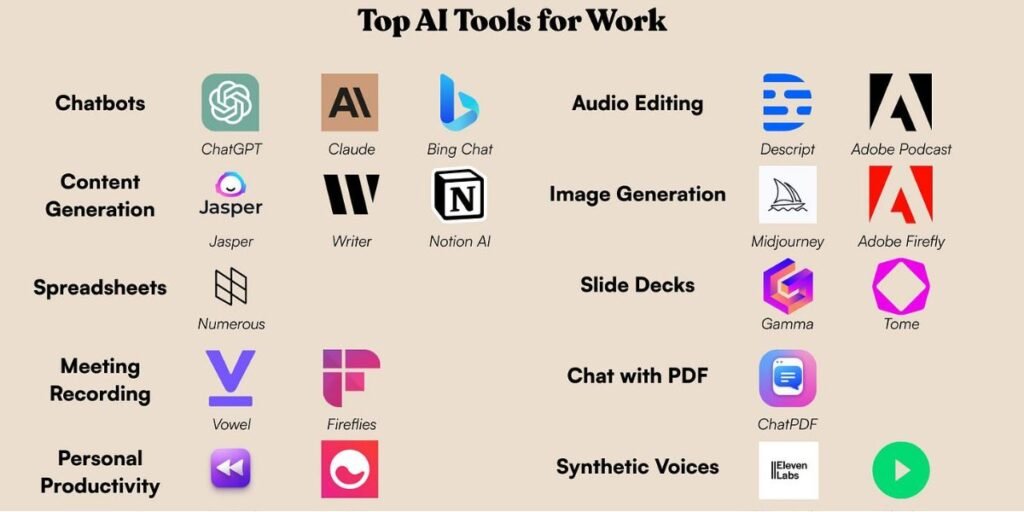
Selecting the right platform requires matching software to your primary content formats, as specialized tools yield higher output quality while reducing editing time. The clearest way to map these applications is by their core intended use:
- Blog Writing: ChatGPT and Claude for core drafting; Writesonic for search visibility.
- Search and Generative Engine Optimization: Surfer for on-page scoring; Writesonic for GEO tracking.
- Marketing & Conversion Copy: Jasper, Copy.ai, and Anyword.
- Social Media Content: Canva and Buffer.
- Research & Fact-Checking: Perplexity.
- Editorial Polish & Editing: Grammarly and Claude.
- Content Operations & Planning: Notion AI.
- Video & Audio Repurposing: Descript.
General-purpose engines like ChatGPT and Claude handle broad drafting and structural rewrites with ease, and both now feature live web search capabilities. Specialized platforms like Surfer or Anyword deliver far greater ROI when performance depends strictly on search rankings or ad conversions.
Why One AI Tool Usually Isn’t Enough
Relying on a single application for every editorial phase often leads to mediocre content. High-performing publishing teams build a multi-tool pipeline that assigns specific tools to dedicated production stages:
- Research: Conduct topic research and fact verification in Perplexity to gather source-backed details.
- Planning: Transfer those insights into Notion AI to construct structured editorial briefs and task cards.
- Drafting: Generate the initial long-form draft using Claude or ChatGPT mapped directly to the brief.
- Optimization & Editing: Refine keyword density and semantic depth in Surfer, then run the text through Grammarly to fix sentence mechanics and tone.
- Repurposing: Use Buffer or Descript to adapt the finished piece into social posts, video scripts, or email newsletters.
Using specialized tools at each stage maintains high editorial standards, factual accuracy, and cross-channel performance throughout the content lifecycle.
Where Human Writers Still Have the Advantage
Despite rapid model advancements, skilled human writers remain essential to high-quality digital publishing. Large language models operate by predicting probable word sequences from historical training data, meaning they cannot originate true personal experience, conduct live expert interviews, or deliver original strategic analysis.
The human edge is concentrated in critical areas that no model can replicate:
- First-Hand Experience: Only human writers can contribute real-world case studies, hands-on product testing, and authentic troubleshooting insights that search engines prioritize under helpful content standards.
- Fact Verification: Human editors detect subtle errors, outdated statistics, and hallucinated claims that AI models present with absolute confidence, a risk that increases as tools update faster than their training sets.
- Voice and Nuance: Experienced editors understand when to trim fluff, adjust pacing, and restructure narrative flow to hold reader attention, protecting a brand voice that reflects real company values and audience expectations.
Treat generative software as an efficiency multiplier for your editorial team, not a total replacement for skilled human creators.
AI Content Generation Tools: Quick Comparison
Pricing below reflects mid-2026 vendor pages and should be reconfirmed before purchase, since this category changes constantly.
| Tool | Primary Specialty | Strongest Feature | Free Tier | Starting Price |
| ChatGPT | Flexible content creation | GPT-5 model family, Custom GPTs | Yes | $20 / month |
| Claude | Long-form writing & editing | 1M-token context window, live web search | Yes | $20 / month |
| Jasper | Marketing campaigns | Multi-brand voice governance | No | $69 / month |
| Copy.ai | Go-to-market workflows | Automated sales & content pipelines | Yes | $29 / month |
| Writesonic | AI search visibility & content | GEO tracking plus Action Center | Limited | $79 / month |
| Rytr | Short-form marketing | Streamlined multi-tone generator | Yes | $9 / month |
| Surfer | Search engine optimization | Real-time SERP scoring & content auditing | No | $49 / month |
| Anyword | Conversion marketing copy | Predictive performance scoring | Trial | $49 / month |
| Grammarly | Editorial polishing | Contextual grammar & tone editing | Yes | $12 / month |
| Canva | Visual & social assets | Integrated Magic Write suite | Yes | $15 / month |
| Buffer | Social media management | In-queue post reformatting | Yes | $6 / channel |
| Descript | Video & audio repurposing | Transcript-based text editing | Yes | $16 / month |
| HubSpot AI | Integrated marketing CRM | Native CRM customer data integration | Yes | Included with CRM |
| Perplexity | Live content research | Cited real-time research | Yes | $20 / month |
| Notion AI | Workspace planning | Connected database & management tools | Limited | $20 / user/month |
Frequently Asked Questions
What are AI content generation tools?
AI content generation tools are software applications built on large language models and machine learning that generate written text, outlines, marketing copy, social posts, and visual assets based on user-provided prompts. In 2026, many of these tools specialize in specific tasks, such as GEO tracking or predictive ad scoring, rather than acting as basic text generators.
Which AI tool is best for writing blog posts?
Claude and ChatGPT lead the market for general long-form drafting and structural editing, with both platforms offering native live web search for current facts. Writesonic is ideal for teams that also need to track how their articles perform inside AI search platforms.
Which AI content tool is best for marketing?
Jasper and Copy.ai offer the most comprehensive feature sets for marketing teams, providing robust brand voice governance, multi-channel templates, and automated campaign workflows. Anyword is best for performance marketers who need predictive scoring for conversion copy.
Can AI-generated content rank in Google?
Yes. Google’s search guidelines focus on content quality, accuracy, and user value rather than the specific tools used to produce it. AI-assisted articles can rank well if they deliver original insights, demonstrate genuine topic expertise, maintain factual accuracy, and satisfy search intent. Generic content that simply repeats existing web pages without adding value will underperform.
Should AI-generated content be edited before publishing?
Always. Raw AI output regularly contains repetitive phrasing, generic claims, and potential factual errors. Human editing is essential to verify data, refine brand voice, introduce expert insights, and ensure the piece delivers genuine reader value.
Can one AI tool handle blogs, marketing, and social media?
While flexible systems like ChatGPT or Claude can draft content across multiple formats, using specialized applications for tasks like GEO tracking, social media scheduling, or video transcription generally yields higher-quality results than relying on a single tool for every workflow stage.