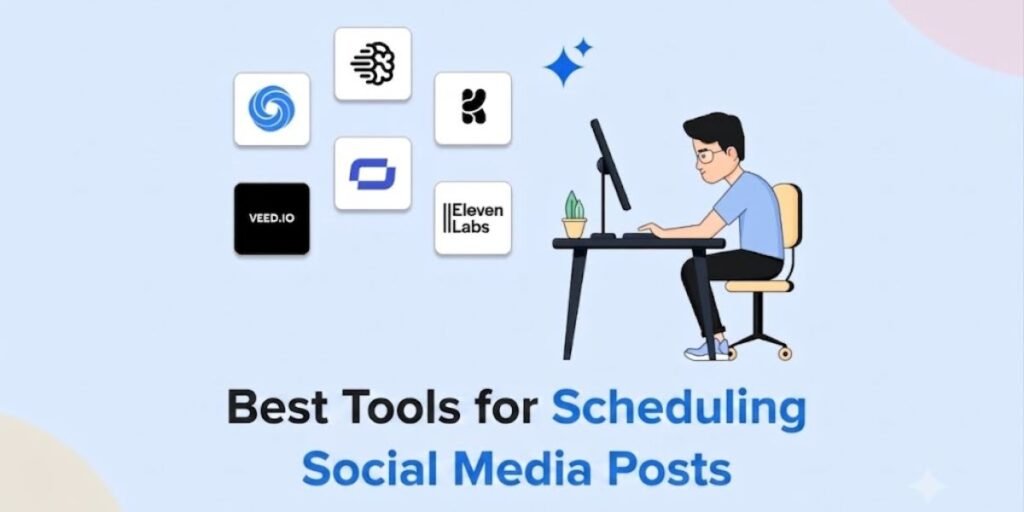
Social media scheduling has moved far beyond the simple act of setting a post to go live later. In 2026, marketing teams and individual creators operate in complex environments where the scheduler functions as a command center, not just a calendar. It is no longer enough to drop a file into a queue and walk away. Professionals need integrated systems that manage content calendars, run multi-level approval workflows, use AI for caption refinement and content ideation, and deliver cross-platform performance analytics.
The category is currently being reshaped by consolidation as much as by feature releases. Hootsuite folded social listening directly into its paid tiers following its 2024 acquisition of Talkwalker, and Later’s 2024 acquisition of Mavely turned it into a creator-economy hybrid, offering scheduling, link-in-bio, and a paid-partnership marketplace in one product. When you manage a digital presence today, your scheduling tool must connect content strategy to actual business outcomes. This guide evaluates 12 platforms that have proven their utility by tying the whole publishing lifecycle together in one dashboard.
How the Right Scheduling Tool Changes Your Workflow
Adopting a dedicated scheduling platform is the fundamental shift from reactive, ad-hoc posting to proactive, strategic operations. Relying on each network’s native tools forces a fragmented workflow that throttles both reach and consistency. A unified scheduler replaces that chaos with a single hub for your content.
Consolidating into one platform changes how a team handles several things at once. Content calendar planning lets you see your weekly or monthly spread at a glance, spot gaps, and keep pace with seasonal or product-driven campaigns. Team collaboration and approvals move drafts, revisions, and sign-offs into the platform itself, cutting out the messy email chains and endless threads that used to carry that work. Multi-network publishing lets you adapt and push content to Instagram, TikTok, LinkedIn, and X from one interface while respecting each network’s specific formatting quirks. Asset management gives your team a searchable repository of brand graphics, evergreen content, and user-generated material. Finally, performance tracking ties engagement back to actual strategy, distinguishing what is working from what is just filling the calendar based on real audience behavior.
The 12 Best Tools for Scheduling Social Media Posts
These tools were evaluated on their performance through 2026, and each is built around a specific operational need.
1. Buffer
Buffer remains the top pick for creators and small teams who want a clean, frictionless experience. Its pricing reflects that philosophy directly. A free plan covers three social channels, and paid tiers offer a straightforward per-channel structure. This, paired with an intuitive composer, is why it is the tool most people professionalizing their presence land on first.
2. Hootsuite
Hootsuite continues to lead as a cross-platform giant for teams running complex, large-scale social operations. Its acquisition of Talkwalker embedded serious social listening directly into its paid tiers, allowing for real-time monitoring of brand mentions and competitor activity. Its OwlyWriter AI feature generates platform-optimized captions and suggests a posting schedule based on actual audience engagement patterns.
3. Sprout Social
Sprout Social is the enterprise-grade choice, pairing robust publishing with deep analytics. A widely cited Forrester study found that Sprout delivers a 268% return on investment over three years for adopting organizations. Its reporting templates are built for executive summaries, campaign recaps, and competitor snapshots, which is exactly why marketing directors reach for it ahead of a board meeting.
4. Later
Later is built for the visual-first strategist. The product now bundles link-in-bio functionality and a creator marketplace for paid brand partnerships alongside its original grid-planning tools. For e-commerce brands and influencers who live or die by a consistent aesthetic, its drag-and-drop calendar remains the fastest way to catch a visually inconsistent week before it publishes.
5. Metricool
Metricool is the preferred tool for data-driven marketers because it bridges organic scheduling and paid ad tracking in one place. Putting organic content performance and paid ad spend into a single report gives a holistic view of a brand’s digital investment.
6. SocialPilot
SocialPilot offers a balanced, cost-effective option that is particularly strong for managing content queues and evergreen recycling. It is built to be accessible, making it effective for small marketing teams that need reliable publishing and basic reporting without paying for enterprise features they will never touch.
7. Agorapulse
Agorapulse stands out through community management. Its unified inbox is one of the most robust on the market, letting teams assign mentions, comments, and direct messages to specific people for resolution. It is the clear choice for brands where engagement volume, rather than publishing volume, is the bottleneck.
8. Loomly
Loomly is built for small businesses and growing brands, differentiating itself through content ideation tools that surface optimization tips and current trends. It functions as both a planning tool and a source of inspiration, which matters most for teams without a dedicated social strategist.
9. Sendible
Sendible is engineered specifically for agencies, with white-label reporting, branded client portals, and multi-client account management built into its core. If your business model involves managing social accounts for dozens of brands at once, its agency-focused feature set is hard to match.
10. CoSchedule
CoSchedule treats social scheduling as one piece of a larger marketing calendar rather than a standalone function. By scheduling social posts alongside blog content and email campaigns in the same view, it keeps an entire communications strategy synchronized.
11. Publer
Publer is the best budget-friendly option for high-volume, multi-platform publishing. It packs a deep feature set, such as bulk scheduling, signature management, and watermarking, into a price point accessible to freelancers and early-stage startups.
12. ContentStudio
ContentStudio leans on AI to save teams time, particularly around content discovery and curation. It surfaces relevant topics and uses AI to help draft and schedule corresponding posts. It is a strong fit for organizations that need high posting frequency without a large team behind it.
Read More: 12 Best Social Media Marketing Tools I Actually Use (Practical Review)
Side-by-Side Comparison: Finding Your Match
| Requirement | Recommended Tool | Core Advantage |
| Best Overall | Buffer | Simplicity and speed |
| Best for Agencies | Sendible | White-label client workflows |
| Best for Creators | Later | Visual grid planning |
| Best for Enterprise | Sprout Social | Deep analytics and governance |
| Best Budget Option | Publer | High-volume evergreen recycling |
| Best Analytics | Metricool | Unified organic and paid tracking |
| Best Collaboration | Agorapulse | Unified inbox assignment |
| Best AI Assistance | ContentStudio | AI-driven content discovery |
Features That Matter More Than Feature Lists
Do not get distracted by long lists of supported networks when evaluating a platform. Marketing teams in 2026 have moved toward evaluating process integrity. A tool can claim to support every network and still become a liability if its connections are unreliable.
API reliability is the technical bedrock worth confirming directly. Ensure the platform maintains a direct connection with each network you use, as workarounds often cause failed posts. Visual calendar UX needs to be more than a list of dates. Look for a drag-and-drop interface that shows your strategy at a glance. Structured approval workflows are essential the moment more than one person touches content; role-based permissions keep mistakes from going live. AI-assisted workflows should go beyond simple caption generation to analyze historical data and suggest optimal posting times. Finally, unified analytics should translate engagement into business insight, correlating social activity to broader company goals rather than presenting numbers in a vacuum.
Frequently Asked Questions
Which social media scheduling tool is best overall?
There is no single best tool, as the right choice depends on your operation’s scale. Buffer remains the gold standard for solo creators and small teams, while Sprout Social is the superior pick for enterprise organizations needing deep reporting and rigorous governance.
Can one tool schedule posts to every major social network?
Yes, most professional platforms support direct integration with Instagram, TikTok, LinkedIn, Facebook, X, and YouTube. If your strategy relies on specific features like collaborative posts or complex story layouts, verify that the tool has a direct API integration for those specific functions.
Are free social media scheduling tools worth using?
Yes, for freelancers or early-stage startups maintaining a simple posting cadence. They eliminate the manual work of logging into each platform separately, though you will eventually hit a growth ceiling regarding connected accounts and historical analytics access.
Which platform is best for agencies managing multiple clients?
Sendible and Sprout Social lead agency workflows. Sendible often wins on cost-to-feature ratio for mid-market client volumes, while Sprout Social is the standard for managing large enterprise clients who expect defensible data and sentiment analysis.
Do these tools publish directly to Instagram and TikTok?
Yes. By 2026, every major scheduler on this list supports direct API publishing to both. The platform APIs have matured enough that high-resolution video and complex tagging work without manual workarounds.
Which scheduling tool offers the best analytics?
For enterprise-level data, Sprout Social is the leader, particularly for cross-platform sentiment analysis. For marketers who need to correlate organic performance with paid ad spend specifically, Metricool is the standout.