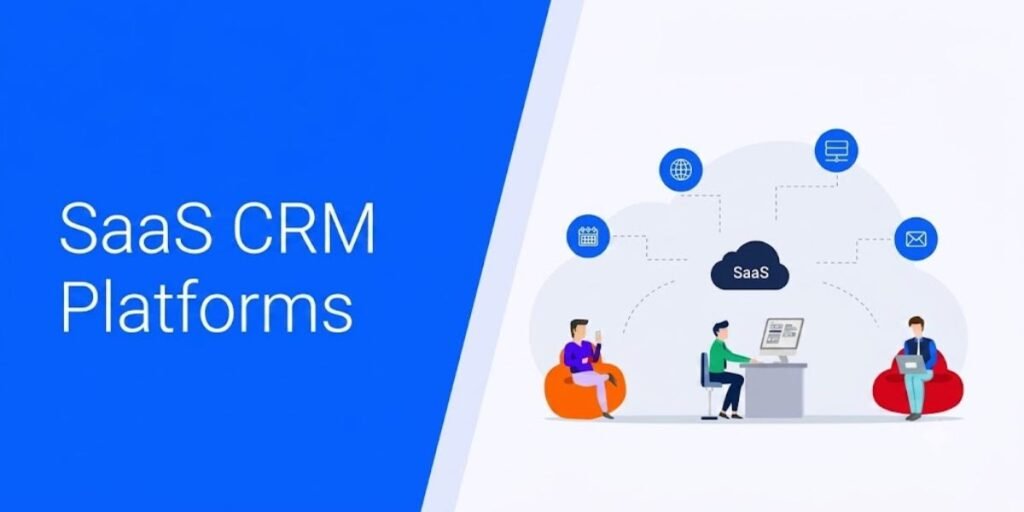
Evaluating customer relationship management technology for a software-as-a-service enterprise reveals operational challenges that traditional commerce and physical product businesses never encounter. Standard databases built for retail or manufacturing focus on isolated point-of-sale transactions where an exchange occurs once and the customer ledger closes. Subscription models invert this dynamic entirely.
When a user creates an account, it initiates a continuous recurring revenue cycle that spans product onboarding, user telemetry tracking, recurring monthly billing, milestone renewals, and potential tier expansion. Many early-stage tech companies make the critical mistake of adopting a generic off-the-shelf CRM platform, only to watch sales teams, customer success agents, and technical support engineers drift into isolated operational silos. Sales teams chase new demo bookings while customer success remains blind to plunging product usage rates until cancellation requests land in the support inbox.
Choosing the right database architecture requires looking past surface-level marketing pitches to understand how well a platform handles subscription lifecycle management, team alignment, and long-term scaling demands.
What Makes SaaS CRM Software Different From Traditional CRM Systems?
The fundamental operational distinction of a software enterprise lies in the fact that closing an initial deal marks the starting point of the commercial relationship rather than its final destination. Traditional customer relationship tools are engineered around linear sales pipelines, tracking a lead from initial contact to a signed contract and treating subsequent interactions as separate customer service tickets. Subscription businesses require an interconnected data model that bridges several critical phases.
Subscription lifecycle telemetry sits at the center of this ecosystem. Capturing monthly recurring revenue metrics, annual contract values, and billing event triggers directly inside the client workspace profile ensures that every team member understands the precise financial health of an account.
Monitoring trial-to-paid conversion rates is another vital pillar. Software teams must track how freemium users or time-locked trial signups migrate into active paying subscribers based on digital feature adoption milestones rather than static demographic data.
Automated customer onboarding workflows bridge the gap between initial acquisition and active usage. Deploying sequenced communications and educational prompts the moment a new user provisions an account workspace prevents early drop-off and accelerates time-to-value.
Proactive renewal management protects existing annual recurring revenue streams by triggering internal alerts months prior to contract expiration windows. This gives account managers ample time to address friction points before renewals are negotiated.
Simultaneously, tracking expansion revenue opportunities allows teams to spot upsell triggers the moment growing client accounts approach seat thresholds or consume higher API and bandwidth limits.
Finally, maintaining absolute visibility into customer health through aggregated product usage logs isolates disengaged accounts before cancellation requests materialize.
How We Evaluated the Best SaaS CRM Platforms in 2026
Navigating the crowded marketplace of enterprise software demands a disciplined evaluation framework rather than relying on generic feature checklists or market popularity metrics. Our assessment methodology tests platforms against criteria that directly dictate operational success for modern subscription teams.
SaaS workflow capabilities represent the baseline requirement. Platforms must provide native support for recurring billing system integrations, custom object mapping, and milestone-based automation triggers.
Sales pipeline flexibility is equally crucial. Systems must offer visual clarity, customizable deal stages, and frictionless management of both inbound product-led growth pipelines and outbound enterprise sales motions.
Automation depth determines how efficiently a growing team can scale operations without adding headcount. We examine the sophistication of trigger-based actions, multi-channel outbound sequences, and intelligent lead routing logic.
Artificial intelligence integration is no longer a futuristic luxury. We look for practical implementations of generative prospecting assistants, predictive forecasting models, and automated interaction logging that reduce manual administrative burdens on reps.
Ecosystem connectivity dictates how cleanly a CRM talks to the rest of the tech stack. Seamless data synchronization with billing gateways like Stripe, product analytics platforms, and customer support helpdesks is mandatory.
Analytics and reporting robustness must extend beyond basic pipeline tallies to include custom dashboard capability capable of calculating cohort retention curves, net revenue retention, and customer lifetime value.
Enterprise scalability measures system stability under massive contact volume growth and rapid internal headcount expansion, while implementation overhead evaluates real-world time-to-value metrics and administrative requirements needed to maintain clean data hygiene over years of operation.
10 Best SaaS CRM Platforms in 2026
Evaluating customer relationship management software requires looking closely at how specific vendor architectures handle the ongoing realities of subscription revenue. Each major platform on the market approaches data structuring, team collaboration, and workflow automation differently, making it critical to examine their distinct trade-offs.
1. HubSpot CRM
HubSpot operates as a unified ecosystem designed to bridge marketing lead generation, active sales pipelines, and post-sale customer service tracking on a single codebase. Growing tech companies rely on it because contact histories flow without friction from initial website attribution all the way to long-term subscription renewals.
Native AI assistants handle repetitive data entry and draft outreach messages, while visual pipeline builders keep teams aligned. The primary drawback involves aggressive pricing expansion as contact volume scales or when advanced custom reporting is required. It fits mid-stage tech businesses that want sales, marketing, and success operations functioning under one roof.
2. Salesforce Sales Cloud
Salesforce remains the heavyweight enterprise standard for complex corporate software organizations requiring deep infrastructure customization. When a business operates with multi-product hierarchies, specialized partner channels, and intricate revenue recognition rules, standard database setups fall short.
The platform offers unmatched configuration depth through its Flow Builder automation and enterprise app marketplace. However, that power introduces a steep learning curve and high administrative overhead, frequently requiring dedicated internal engineers or expensive external consultants to maintain. It is built explicitly for large-scale enterprise SaaS operations.
3. Pipedrive
Pipedrive is engineered from the ground up by sales professionals for sales execution, prioritizing visual pipeline velocity over complex marketing suites. Early-stage startup teams use it to track outbound sales loops and inbound trial demos without getting bogged down by administrative complexity.
Its Kanban-style boards and activity-based reminders keep reps focused on closing deals. Because it lacks native marketing automation and deep customer success health scoring, teams often pair it with external point solutions. It suits sales-led startups where pipeline clarity and user adoption are the immediate priorities.
4. Zoho CRM
Zoho CRM delivers a remarkably broad feature set at a price point that appeals strongly to bootstrapped teams and budget-conscious tech companies. Growing businesses gain access to advanced workflow rules, multi-channel communication tools, and process management capabilities without paying enterprise licensing fees.
The layout can feel visually cluttered due to the sheer volume of integrated modules, and initial configuration requires patience. It works well for early-stage and mid-market SaaS organizations looking for maximum software depth on a controlled budget.
5. Freshsales
Freshsales focuses heavily on sales productivity by embedding communication channels directly into the contact profile view. Built-in email tracking, phone dialers, and chat tools eliminate the friction of switching between standalone applications.
An AI-powered lead scoring engine automatically prioritizes prospects based on engagement levels and digital footprint. While advanced custom reporting options are somewhat constrained on lower pricing tiers, it provides an efficient operational environment for growing commercial teams.
6. Monday CRM
Monday CRM adapts flexible workspace management principles into a visual customer relationship platform built on customizable board layouts. Teams that manage specialized client onboarding projects alongside deal pipelines appreciate its modular design and fast team onboarding.
Board-level automations trigger updates based on date milestones or status changes. It places less emphasis on native recurring revenue metrics compared to purpose-built subscription platforms, making it ideal for collaborative tech teams prioritizing operational flexibility.
7. Close CRM
Close CRM is built explicitly for high-velocity inside sales teams that rely heavily on heavy outbound calling, automated email sequences, and rapid deal generation. Built-in calling, SMS messaging, and sequence automation live directly on the main screen, removing the need for clunky third-party dialer integrations.
It is intentionally narrow in focus, meaning it lacks broad marketing automation or customer success health dashboards. It serves outbound-heavy sales organizations running aggressive inside-sales motions.
8. Attio
Attio represents a modern, data-native approach to CRM architecture built specifically for product-led growth startups and digital-first tech companies. Instead of locking teams into rigid deal stages, it treats data like a flexible spreadsheet where custom object relationships can be mapped instantly to live product usage data.
While its historical third-party ecosystem is smaller than legacy enterprise giants, its data flexibility and modern interface make it a strong fit for product-led tech startups.
9. Gainsight
Gainsight defines the category of enterprise customer success platforms focused entirely on retention management, customer health scoring, and account expansion. Subscription businesses living or dying by net revenue retention leverage its sophisticated health-scoring algorithms and automated risk alerts to spot churn threats early.
The platform demands significant implementation effort and financial investment, positioning it strictly for established enterprise software companies rather than early-stage startups.
10. Microsoft Dynamics 365 Sales
Microsoft Dynamics 365 Sales provides a secure, enterprise-grade CRM solution for large corporate software houses already standardized on the Microsoft digital ecosystem. Native integration with Office 365, Teams, and Power BI streamlines data sharing across departments.
Advanced predictive forecasting and Copilot AI features assist reps with deal insights, though setup complexity remains high and requires specialized administrative oversight.
Read More: What Is CRM Software? A Simple Guide for Modern Businesses
SaaS CRM Platforms Comparison Table
| CRM Platform | Best For | Ideal SaaS Stage | Key Strength |
| HubSpot CRM | All-around SaaS teams | Startup to growth | Unified sales, marketing, and customer service ecosystem |
| Salesforce Sales Cloud | Enterprise SaaS | Scale-up to enterprise | Limitless customization and multi-product architecture |
| Pipedrive | Sales-focused startups | Early stage | Intuitive visual pipeline management |
| Zoho CRM | Budget-conscious teams | Startup and SMB | Exceptional feature breadth and value |
| Freshsales | AI-driven sales teams | Growth stage | Built-in communication tools and AI lead scoring |
| Monday CRM | Flexible operations | Growing teams | Customizable workflow boards and project tracking |
| Close CRM | Outbound SaaS sales | Startup to growth | Native calling, email sequences, and high-velocity dialing |
| Attio | Modern SaaS startups | Early growth | Flexible, data-native custom object modeling |
| Gainsight | Customer success teams | Enterprise SaaS | Advanced retention management and health scoring |
| Microsoft Dynamics 365 | Enterprise organizations | Large SaaS companies | Tight integration with the Microsoft enterprise stack |
Key Features SaaS Companies Should Look For in CRM Software
Choosing a CRM for a subscription-based business requires prioritizing software capabilities that align with recurring revenue cycles. General-purpose pipeline tracking is insufficient when operations rely on ongoing digital engagement.
- Customer Lifecycle Management: The platform must natively map the user journey from initial website visit and freemium registration to trial activation, paid conversion, renewal, and tier expansion.
- Sales Pipeline Automation: Systems need custom deal stages configured specifically for software sales motions, such as proof-of-concept validation, security reviews, and contract negotiations.
- Customer Success Visibility: Account records must display product telemetry, feature adoption rates, and active user counts so success teams can spot churn risks proactively.
- Revenue Forecasting: Advanced analytical models must accurately project monthly recurring revenue and annual contract values based on historical conversion velocity.
- AI-Powered Workflow Automation: Artificial intelligence components should automatically log communication history, draft personalized follow-ups, and score inbound leads based on engagement behavior.
- SaaS Tool Integrations: Seamless API synchronization with billing gateways like Stripe, product analytics tools such as Mixpanel, and helpdesk ticketing platforms is mandatory.
- Reporting and Analytics: Custom dashboards must be capable of tracking vital software metrics, including net revenue retention, gross churn, and customer lifetime value.
Choosing a SaaS CRM Based on Your Business Stage
Operational needs shift dramatically as a technology company matures from an early-stage concept into a scaled enterprise organization.
Early-Stage SaaS Startups
Early-stage teams require lightweight, agile databases that eliminate administrative friction and keep burn rates low. Founders typically handle initial sales motions themselves, making speed-to-deploy, intuitive visual pipelines, and affordable per-seat pricing critical priorities.
Growing SaaS Companies
Scaling tech firms experience departmental fracturing as dedicated sales, marketing, and customer success teams expand. At this stage, the priority shifts to unified platforms that prevent data siloing, automate handoffs between departments, and provide reliable multi-channel communication tools.
Enterprise SaaS Organizations
Large software enterprises require strict administrative governance, granular role-based permissions, and complex multi-product data mapping. The chosen architecture must scale smoothly across thousands of contacts while integrating deeply with corporate IT security protocols and business intelligence tools.
SaaS CRM Implementation: What Companies Should Plan Before Switching Platforms
Migrating to a new customer relationship management system demands careful structural planning to avoid data loss and operational downtime.
- Data Migration: Clean historical customer records, map custom subscription attributes correctly, and eliminate duplicate entries before importing files into the new environment.
- Workflow Design: Outline every automated trigger, email sequence, and deal stage on paper before building them inside the software platform.
- Team Adoption: Conduct comprehensive internal training sessions to ensure sales reps and success managers understand the new workflows and data entry standards.
- Integration Planning: Establish secure API connections with billing engines, email clients, and product analytics platforms prior to launch.
- Performance Measurement: Monitor user adoption rates, data hygiene metrics, and pipeline velocity during the initial transition window to catch friction points early.
Frequently Asked Questions About SaaS CRM Platforms
What is the best SaaS CRM platform in 2026?
The top platform depends on company maturity and operational workflow. HubSpot excels as an all-in-one ecosystem for scaling teams, Attio leads for modern product-led startups, and Salesforce remains unmatched for complex enterprise requirements.
Which CRM is best for SaaS startups?
Early-stage startups benefit most from agile, cost-effective platforms like Pipedrive for pure sales execution, Attio for data flexibility, or the robust free tier offered by HubSpot.
Is HubSpot better than Salesforce for SaaS companies?
HubSpot offers superior ease of use, faster implementation times, and a unified interface for marketing, sales, and service. Salesforce provides greater customization depth and enterprise scalability for organizations with dedicated administrative teams.
Do SaaS companies need a dedicated CRM?
Yes. Subscription models involve ongoing customer interactions, trial conversions, and renewals that standard accounting software or basic spreadsheets cannot track effectively as the business scales.
What CRM features matter most for subscription businesses?
The most critical capabilities include recurring revenue tracking, product usage telemetry integration, customer health scoring, automated onboarding workflows, and robust subscription reporting.
How much does SaaS CRM software cost?
Pricing varies widely. Basic starter tiers range from free options or low-cost plans around $14 to $25 per user monthly, while advanced enterprise architectures can scale into hundreds of dollars per user alongside significant implementation fees.